
Roman Lefke: People and Life
Dedications to Asklepios and Zeus Agathios and four funerary inscriptions from the Roman Imperial period have been catalogued at ancient Leukai in central Osmaneli. Together with material from nearby villages, they place the area among the epigraphically rich parts of Nikaia’s rural territory.
Most private and religious inscriptions are in Greek; Roman names such as Marcus, Aurelius, Titus, Rufina and Licinnia also occur. The safest description is a strongly Hellenised Bithynian/Anatolian society writing in Greek within the Roman political system.
Ancient Lefke at a Glance
Some source maps, charts and plans retain Turkish labels; the captions are in English. Label key: harita = map; köy = village; merkez = town centre; yol = road; nehir = river; nüfus = population; göç = migration; yıl = year; kadın = female; erkek = male; eski = historical; güncel = present-day; compass K/D/G/B = N/E/S/W.
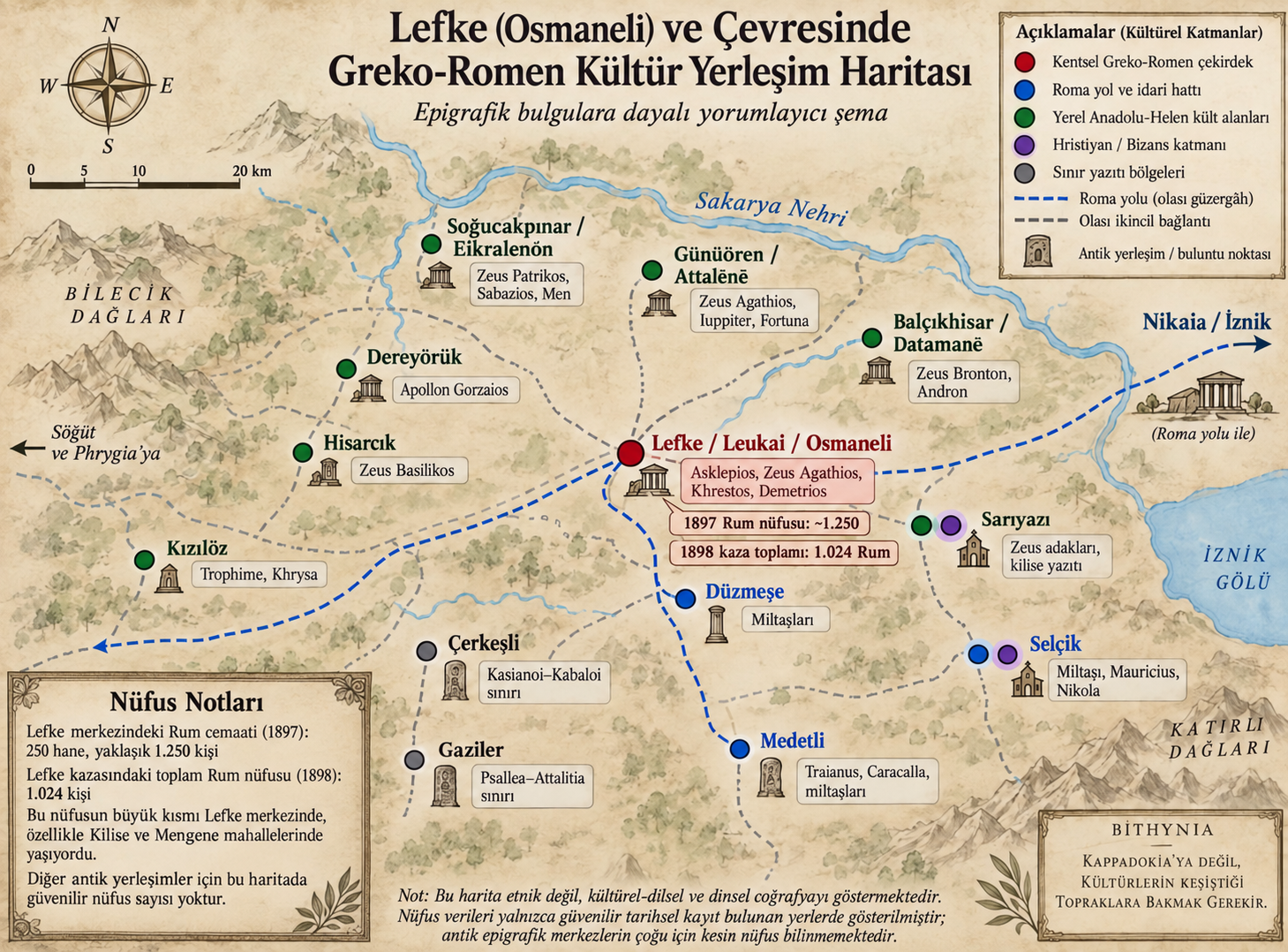


Villages, Gods and Society
Datamanē / Balçıkhisar
The Zeus Bronton altar of Datamanē kōmē directly links village identity with rural religious life.
Attalēnē / Günüören
Dedications to Zeus Agathios, Iuppiter Optimus Maximus Tutor and Fortuna Regina show Greek and Roman religious terminology in the same village area.
Eikralenōn / Soğucakpınar
Zeus Patrikos, Sabazios and Men, together with large family tombs, make local Anatolian cults and family property visible.
Economy and Everyday Life
Agriculture and Land
The Psallea–Attalitia and Kasianoi–Kabaloi boundary inscriptions show that village lands were defined and that their boundaries carried legal importance for communities.
Water Infrastructure
At Dereyörük, Demetrios son of Menandros restored a fountain at his own expense and dedicated it to Apollo Gorzaios, combining technical expertise with public benefaction.
The Road Economy
The mansio at Düzmeşe, the mutatio connection at Büyükyenice and the Medetli milestones indicate a lasting transport economy used by soldiers, officials, merchants and travellers.
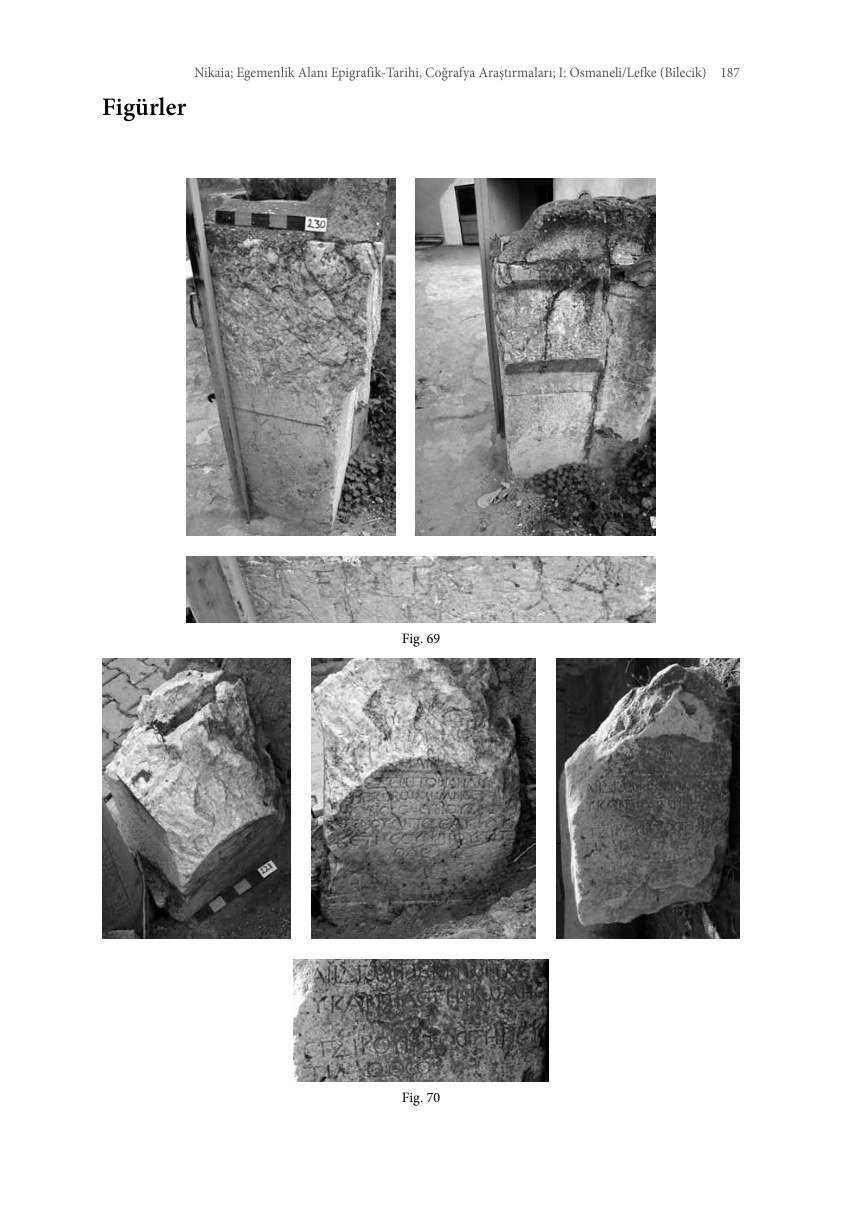
Images of Leukai from the Book



Contribute to the Research
If you have photographs, documents, gravestone records or family accounts relating to Lefke, please share them with us.
✉ Contact Form