
Date and Route of the Visit
16 January 1923
Mustafa Kemal Pasha and his delegation travelled through Bilecik on their journey from Eskişehir to İzmit. Hâkimiyet-i Milliye’s report of 17 January records that the train left Bilecik on the morning of 16 January and reached İzmit via Vezirhan, Lefke, Mekece, Akhisar, Geyve, Doğançay, Arifiye and Sapanca.
From Bilecik at 09:30
According to Ali Okumuş’s chronology based on contemporary sources, the train left Bilecik station at 09:30. After a brief reception at Vezirhan, it reached Lefke / Osmaneli station about twenty kilometres further on.
The Death of Zübeyde Hanım
Zübeyde Hanım died in İzmir on 14 January 1923. Mustafa Kemal Pasha received the news in Eskişehir and continued his journey. A child’s recitation in Osmaneli of a poem written in his mother’s voice therefore became an especially emotional moment.
What Happened at the Station?
Crowds, Flags and Schoolchildren
Recep Zühtü, proprietor of Hâkimiyet-i Milliye and a member of the travelling party, describes a dense crowd of townspeople and officials at Osmaneli station, joined by schoolchildren of different ages carrying flags on their shoulders. He states that the children recited verse addresses to Mustafa Kemal Pasha.
Source: Recep Zühtü, “Eskişehir’den İzmit’e Doğru” [From Eskişehir towards İzmit], Hâkimiyet-i Milliye, no. 721, 24 January 1923, p. 1; Ali Okumuş (2024), pp. 213–214.
A Poem in His Mother’s Voice
According to the testimony, one young child, unaware of Zübeyde Hanım’s death, recited a poem written in her voice. Recep Zühtü reports that this revived Mustafa Kemal Pasha’s grief, although he maintained his composure. The same account says that he drew teachers’ attention to the pupils’ cleanliness and care, then greeted the village women at the station and asked after them.
What the Photographs Show
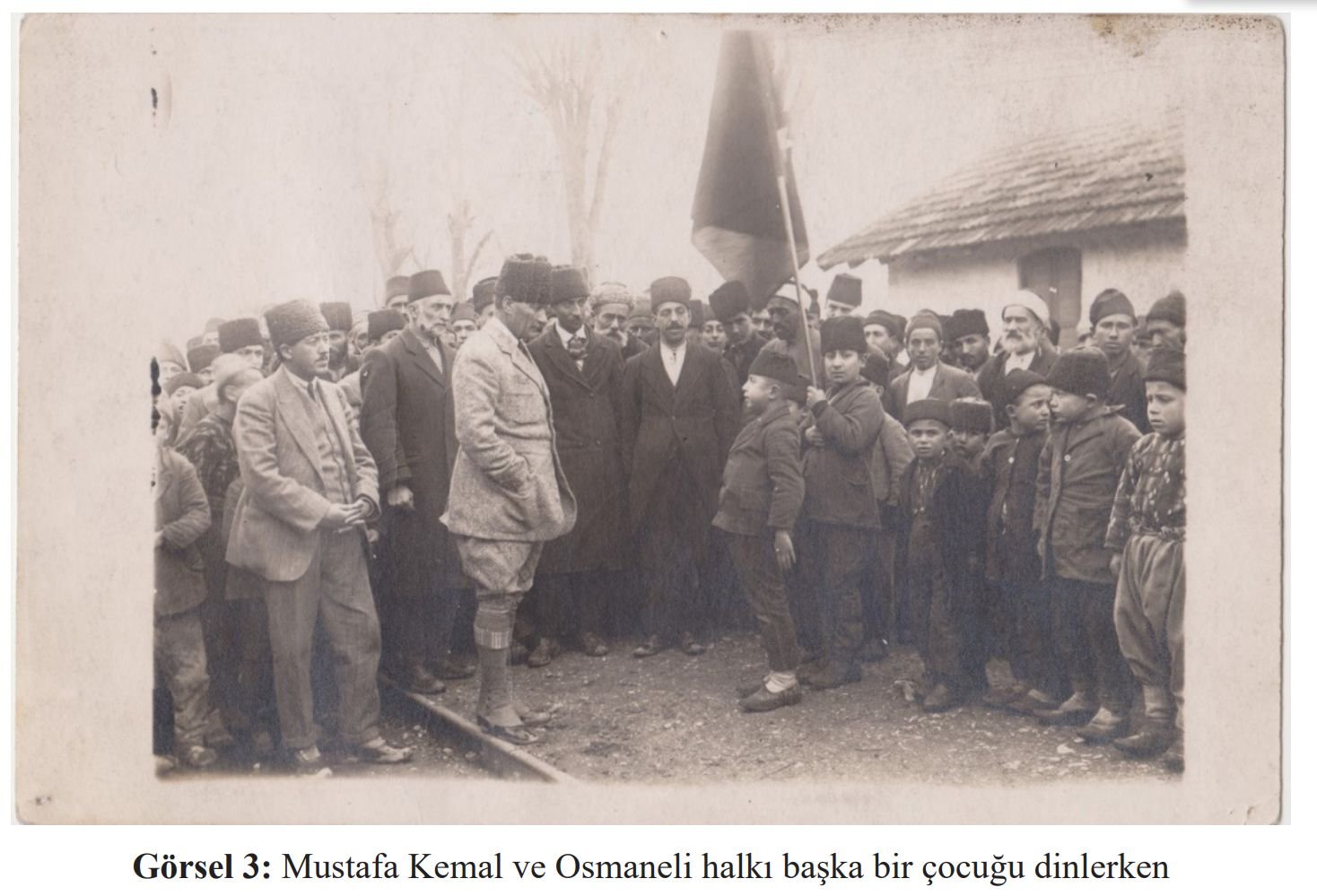
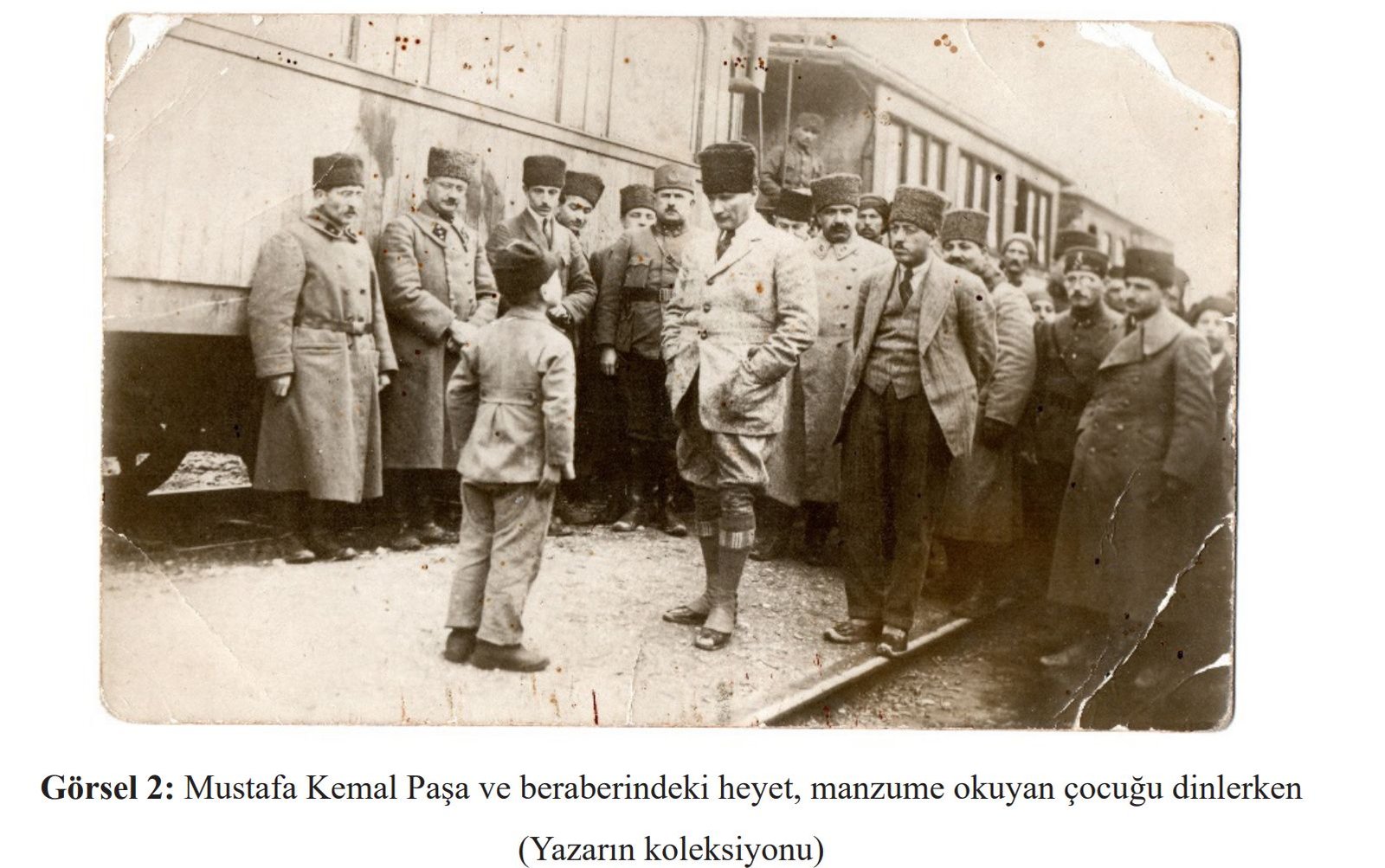
Direct Evidence in the 1923 Press

“At Lefke station…”
Hâkimiyet-i Milliye of 24 January 1923 identifies the crowded scene as schoolchildren reciting verse before Gazi Pasha at Lefke station. Its 30 January issue also captions the other photograph as a meeting with schoolchildren in Lefke. The contemporary press thus confirms both photographs’ connection with the Osmaneli / Lefke visit.
The location is strongly documented; the children’s personal identities do not appear in the contemporary captions.
Fadıl Ünver: Identification Preserved in Family Memory
“The child in the photograph was Fadıl”
According to the family account, the child reciting the long poem in the crowded photograph was the project contributor’s grandmother’s brother, Fadıl Ünver. His sister, Nezihe Ocaktan, recalled that Fadıl spent days memorising the long poem. His grandfather, Rıdvan Alsancak , also recalled recognising the people of Osmaneli in the photograph individually.
In the family’s identification, the person holding the flag at the back is remembered as Avni, and the bearded person as Hacı Halit . These names currently have the status of oral testimony.
The 1959 Hayat Mecmuası Trail
According to the account preserved in the family, the photograph appeared in 1959 in Hayat Mecmuasıwithout the child’s name. Fadıl Ünver contacted the magazine to identify himself, and a correction appeared in a later issue. Since these two issues have not yet been located, the claim is retained as family testimony that can be checked , rather than as a documented finding.
Research target: issue, date and page of the first photograph → Fadıl Ünver’s submission → identification in a later issue. Locating this chain would connect the photographic identification to an independent period document.
The Kemal Keskin Account and the Second Child
Kemal Keskin
Osmaneli Municipality’s 2018 publication identifies the pupil who recited the poem as Kemal Keskin. Later local publications repeat that he was nine or ten, spoke with Mustafa Kemal about their shared name “Kemal,” and later became a staff colonel and lecturer at the War Academies.
No Name in Contemporary Sources
In his 2024 study, Ali Okumuş stresses that Recep Zühtü and other contemporary sources from 1923 do not name the child who recited the poem. He therefore does not treat the Kemal Keskin identification as a verified fact from 1923.
“Kemal Efendi” in 1925
The issue dated 12 February 1925 of Yeni Yol includes a photograph of pupil no. 8, Kemal Efendi of Osmaneli school, in its “Our Diligent Children” list. Okumuş notes that facial resemblance may support the Kemal Keskin possibility, but is not proof by itself.
The Delegation in the Photographs
Mustafa Kemal Pasha
In 1923 he was touring western Anatolia as Speaker of the Grand National Assembly and Commander-in-Chief. The photographs show him in civilian clothes and a kalpak hat.
Fevzi Pasha and Kâzım Karabekir
In Ali Okumuş’s analysis, Marshal Fevzi Pasha and Kâzım Karabekir stand behind Mustafa Kemal Pasha in the first two images. The arrangement of the delegation supports the photographs having been taken in the same place at short intervals.
Cevad Abbas and the Photographer
The delegation also included Bolu deputy Cevad Abbas Gürer. Okumuş considers Esat Nedim Tengizman a possible photographer in the party; this remains a possibility.
Open Research Questions
1. Hayat, 1959
Can the issue containing the photograph and the subsequent issue containing Fadıl Ünver’s identification correction be found?
2. The Identities of the Two Children
Can childhood photographs of Fadıl Ünver and Kemal Keskin be compared with the 1923 images?
3. Sabri Özlü Collection
Does the back of the original print at the Living City Museum carry a name, date, stamp or inventory note?
4. The Poem’s Text
Can the full poem written in Zübeyde Hanım’s voice be located in school, newspaper or family archives?
Sources and Levels of Evidence
Primary / Contemporary Sources
Hâkimiyet-i Milliye, no. 715 (17 January 1923), no. 721 (24 January 1923) and no. 726 (30 January 1923); Recep Zühtü’s travel account; Kâzım Karabekir’s diaries. The captions of 24 and 30 January directly support the identification of the scene as Lefke / Osmaneli.
Modern Research and Oral History
Ali Okumuş, “Mustafa Kemal Paşa’nın Batı Anadolu’da Eskişehir, İzmit, Bilecik ve Bursa Seyahatlerine (Ocak 1923) Dair İzlenimler ve Bazı Tespitler” [Observations on Mustafa Kemal Pasha’s Western Anatolian Travels in January 1923], Yakın Dönem Türkiye Araştırmaları [Recent Period Turkish Studies], 46 (2024), 197–238. Family oral history: information transmitted by Nezihe Ocaktan, Rıdvan Alsancak and the family of Fadıl Ünver.
Contribute to the Research
Please share photographs, clippings or family documents concerning the 16 January 1923 visit to Osmaneli, Fadıl Ünver, Kemal Keskin or Hayat Mecmuası in 1959.
✉ Contact Form