
Neighbourhoods, Population and Institutions
Kilise and Mengene
Stand out in nineteenth-century records as the two main Greek Orthodox neighbourhoods in central Lefke.
1897
Records associated with Aya Yorgi’s reconstruction give approximately 250 Greek Orthodox households and 1,250 people.
1898 Yearbook
The figure of 1,024 Greek Orthodox people in Lefke subdistrict must not be combined with the 1897 figure as a single series, given the different year and administrative context.
Geography of the Greek Orthodox Community


Education, Language and Religion
Schools
Studies drawing on the 1898 Hüdavendigâr provincial yearbook mention three Christian schools in Lefke. Martoglou’s work at its scholarcheio also provides biographical evidence for Greek Orthodox educational institutions.
Greek and Turkish
Greek was the main language of church, education and written culture. Family oral history also points to a strong Turkish presence in neighbourly contact and weddings.
Metropolitan Affiliation
Lefke’s Greek Orthodox community belonged to the Metropolis of Nikaia/İznik. The late Ottoman metropolitan seat at Kios/Gemlik explains references to the “Metropolis of Gemlik.”
Cemetery and the Priest’s House
Elders’ description “above the slaughterhouse, now a school” makes the area near Osmangazi Primary School / above the old slaughterhouse a strong research location for the former Christian cemetery. Without an old cadastral or cemetery registration record, it remains unconfirmed.
The building promoted by the municipality as the “Priest’s House” may differ from the small two-storey priest’s house remembered beside the church. Field and cadastral work are needed to distinguish them.
Names, Families and Community Officers
Greek Orthodox Name Lists
Explore documented residents, patronymics and household links in Kilise and Mengene neighbourhoods.
Families by Neighbourhood
Family, occupation and mobility examples from Kilise and Mengene are arranged comparatively on one page.
Priests, Doctors and Teachers
Documented individuals including Father Yani, Father Kozak-oğlu Dimitri, Ohannes of Ioannina, Panayot Papa Döpolo and Diyonisyos are grouped separately.
A Gravestone’s Testimony: From Misthi to Osmaneli

The Inscription’s Language and Character
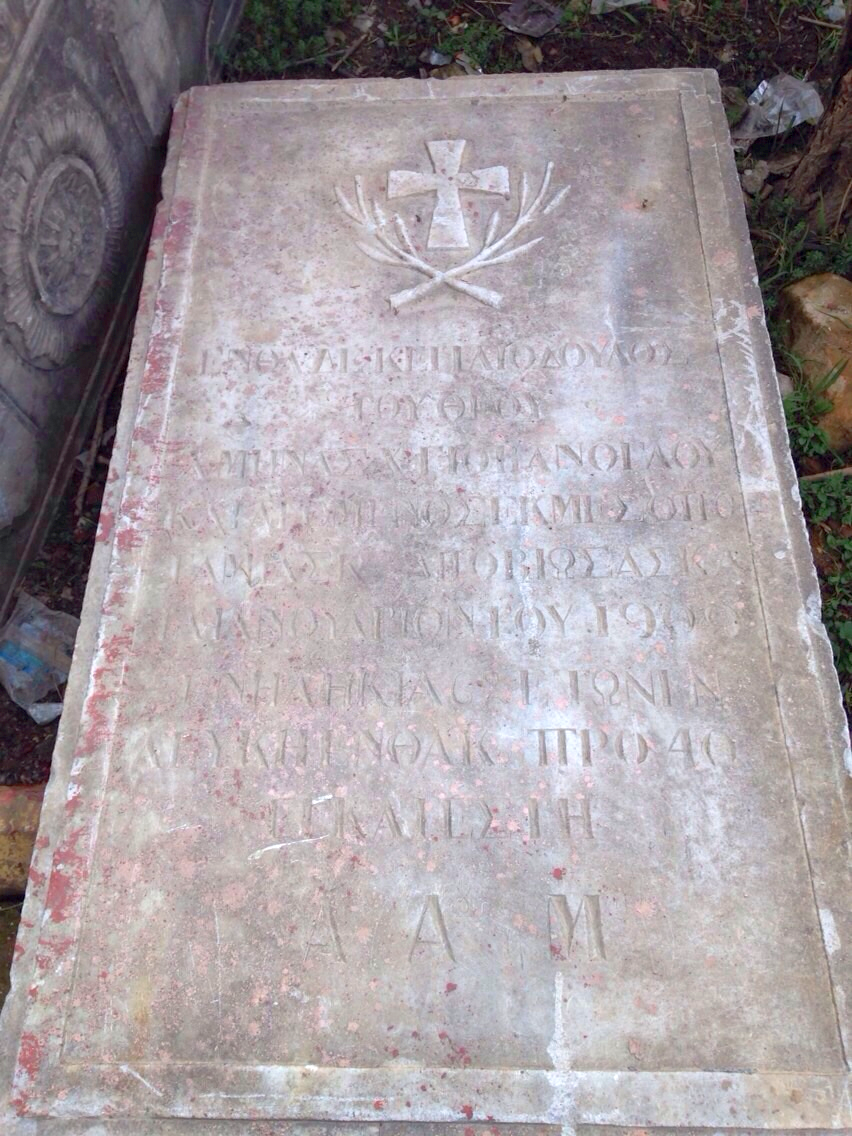
The inscription on this gravestone in Osmaneli, Bilecik, is Greek, associated with the local Greek Orthodox community, rather than Karamanlidika. It provides a material trace of language, faith and migration among the community living in Ottoman Lefke.
Greek Text (Transcription)
ΕΝΘΑΔΕ ΚΕΙΤΑΙ Ο ΔΟΥΛΟΣ
ΤΟΥ ΘΕΟΥ
ΑΝΤΩΝΙΟΣ Χ" ΙΩΑΝΟΓΛΟΥ
ΚΑΤΑΓΟΜΕΝΟΣ ΕΚ ΜΙΣΘΙΟΥ
ΚΑΠΠΑΔΟΚΙΑ[Σ] ΑΠΟΒΙΩΣΑΣ Κ[ΑΙ]
11 ΙΑΝΟΥΑΡΙΟΥ ΤΟΥ 1905
ΕΝ ΗΛΙΚΙΑ(Ι) 62 ΕΤΩΝ...
... ΠΡΟ 40
ΕΤΩΝ...
... Α + Μ
English Translation
Here lies the servant of God Antonios Hacı İvanoğlu or Yuvanoğlu, originating from Misthi (Konaklı) in Cappadocia, who died on 11 January 1905 aged 62. The worn lower lines may contain a biographical detail such as his arrival or settlement here forty years earlier.
Signs on the bottom line: This area is heavily worn. The reading “A + M” is uncertain. If the signs are actually “Α + Ω,” they may represent the Christian Alpha–Omega formula (“beginning and end”), but the photograph cannot establish this.
Misthi (Konaklı)
Antonios’s home village Misthi is now Konaklı in Niğde province. Historically it was an important Greek Orthodox settlement in Cappadocia. Its inhabitants spoke Misthiotika, a distinct Cappadocian Greek dialect with Byzantine roots and extensive Turkish vocabulary.
A Trace of Migration
The apparent “forty years” in the lower lines suggests that Antonios may have arrived in Lefke from Cappadocia in the 1860s. This reading is uncertain. Nineteenth-century Cappadocian Greeks are known to have moved elsewhere in Anatolia for work, trade, stoneworking and livelihoods.
Historical Significance
The gravestone makes an individual life between Cappadocia and the Marmara region visible. It also bears witness to late Ottoman internal migration, multilingual society and shared Anatolian heritage.
Academic Assessment
The decisive indicators of language are grammar and vocabulary, not the alphabet alone. Academic literature defines Karamanlidika as Turkish written in Greek letters .1 This gravestone instead uses Greek expressions: ΕΝΘΑΔΕ ΚΕΙΤΑΙ (“here lies”), Ο ΔΟΥΛΟΣ ΤΟΥ ΘΕΟΥ (“the servant of God”), ΚΑΤΑΓΟΜΕΝΟΣ ΕΚ (“originating from”), ΑΠΟΒΙΩΣΑΣ (“having died”) and ΕΝ ΗΛΙΚΙΑ (“at the age of”). These words and grammatical forms support its classification as a Greek-language Greek Orthodox funerary inscription .
The place read as Antonios’s birthplace, Misthi / Misti, is placed in the Central Cappadocian dialect group by modern linguistic studies.2 R. M. Dawkins’s classic 1916 study also discusses Misti among Cappadocia’s Greek-speaking settlements.3 There is therefore no linguistic contradiction between Antonios’s Cappadocian origin and a Greek funerary inscription.
Reading status: Because the surface is worn, the surname, age line and lower section containing “forty years” must remain provisional readings. They should be rechecked using higher-resolution raking-light photographs, RTI/photogrammetry or specialist epigraphic examination.
Karamanlidika or Greek?
| Feature | Karamanlidika | This Gravestone |
|---|---|---|
| Alphabet | Greek letters | Greek letters |
| Language | Turkish | Greek |
| Typical example | Turkish sentences written in the Greek alphabet | ΕΝΘΑΔΕ ΚΕΙΤΑΙ Ο ΔΟΥΛΟΣ ΤΟΥ ΘΕΟΥ |
| Conclusion | Greek script, Turkish language | Greek script and Greek language |
An important distinction: Greek letters alone do not establish a Greek-language text. Here, vocabulary and Greek grammar are the relevant evidence.4
Source Note on Misthi / Konaklı
The Academy of Athens digital archive identifies the settlement as Μιστί (Cappadocia) / Konaklı .5 Modern linguistics studies Misti as a Cappadocian dialect strongly influenced by Turkish but genealogically Greek.2 Avoid generalisations that all Misthi residents were Turkish-speaking Karamanlides or, conversely, that Turkish was never used. Language contact was substantial; Misti is nevertheless classified academically as Cappadocian Greek.
Notes and Bibliography
- Richard Clogg, “A Karamanlidika Inscription from Mount Athos (1818),” Byzantine and Modern Greek Studies. Defines Karamanlidika as Turkish written in Greek letters. Go to source.
- “A dialectometric approach to inner Asia Minor Greek”, Digital Scholarship in the Humanities 38/4 (2023). Classifies Misti in the Central Cappadocian dialect group. Go to source.
- R. M. Dawkins, Modern Greek in Asia Minor: A Study of the Dialects of Silli, Cappadocia and Pharasa, Cambridge University Press, 1916. Go to digital record.
- Peter Mackridge, “A Turco-Greek inscription at Ürgüp in Cappadocia,” Byzantine and Modern Greek Studies. Comparative example showing Karamanlidika funerary inscriptions as Turkish texts written in Greek letters. Go to source.
- Academy of Athens Digital Archive, settlement record “Μιστί (Καππαδοκία)”; Turkish equivalent Konaklı. Go to record.
Wider Historical Background
Nineteenth-century Osmaneli attracted people through agriculture, silk and transport networks. Antonios’s story may be a local example. The 1923 population exchange was a major rupture for Misthi and similar Greek Orthodox settlements: its Greek Orthodox inhabitants were sent to Greece in 1924; the settlement was later named Konaklı and received Muslim exchangees.
This inscription in Osmaneli records a death and also recalls historical connections between Cappadocia and Lefke.
Oral History
Turkish folk songs beginning “Al yanaklım…” (“my rosy-cheeked one”) were sung at Greek Orthodox weddings.
Children played at reading the Greek alphabet with their Greek Orthodox friends.
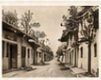
“We were like siblings with the Rum”; the streets were “clean enough to eat off.”
Some families say they hid Greek Orthodox neighbours and were threatened by armed bands for doing so.
The Roza Case: Origin and Community Affiliation
Muzaffer Doğan’s study of the 1894 Roza and Âsım case discusses a family of Bulgarian origin and its connection to Lefke’s Greek Orthodox church. The father’s emphasis on Bulgarian affiliation differs from Roza’s assertion of belonging to the Greek Orthodox community. One case cannot explain all Christians’ affiliations or marriage patterns in the town.
Contribute to the Research
If you have photographs, documents, gravestone records or family accounts relating to Lefke, please share them with us.
✉ Contact Form