
Lefke from Rome to the Present
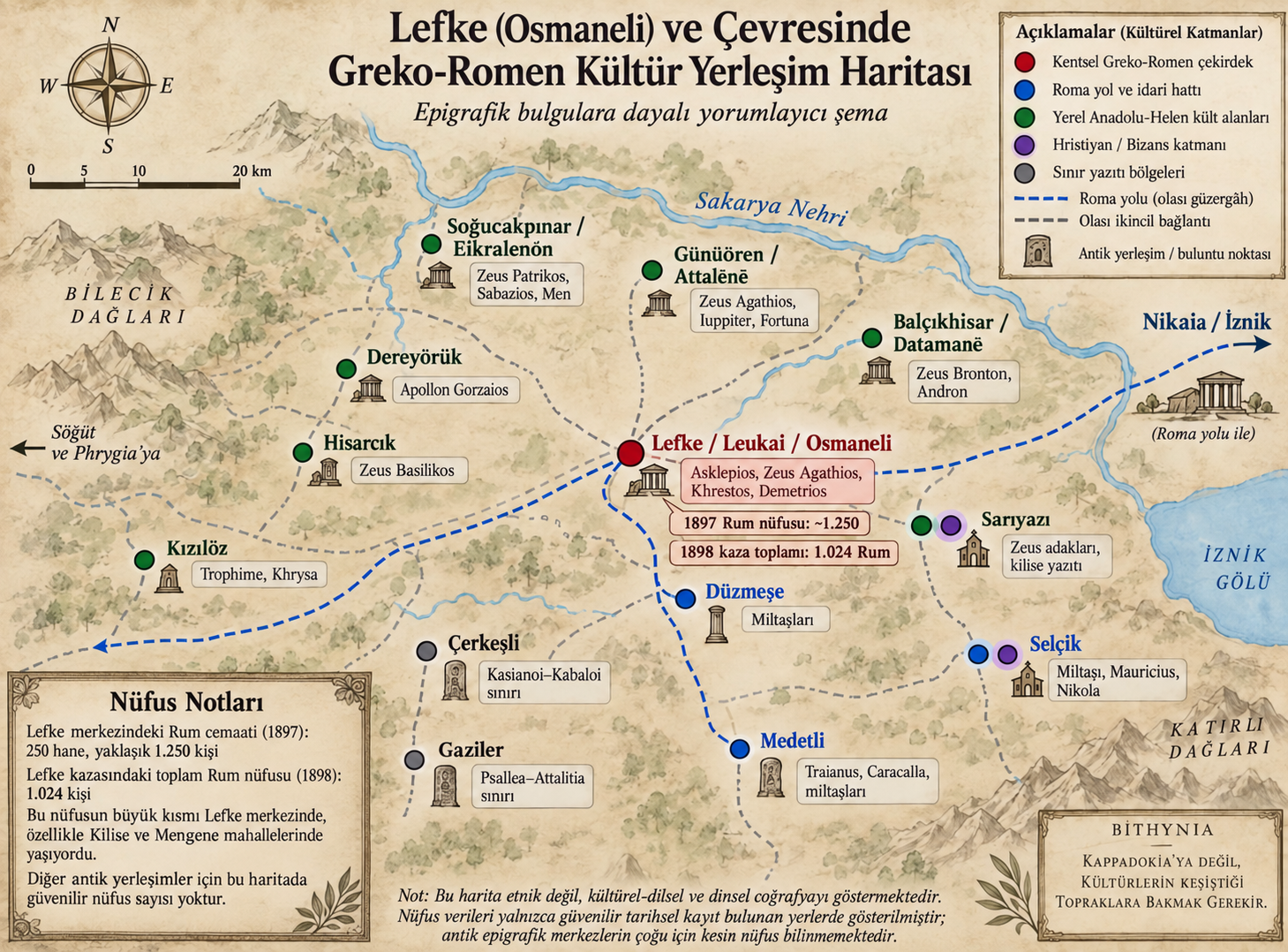
Leukai and Nikaia’s Countryside
Greek inscriptions, local villages, Zeus cults, graves and the Roman road network.
Leukai
The Crusader route of 1097, monastic property, bridges and Laskarid fortifications.
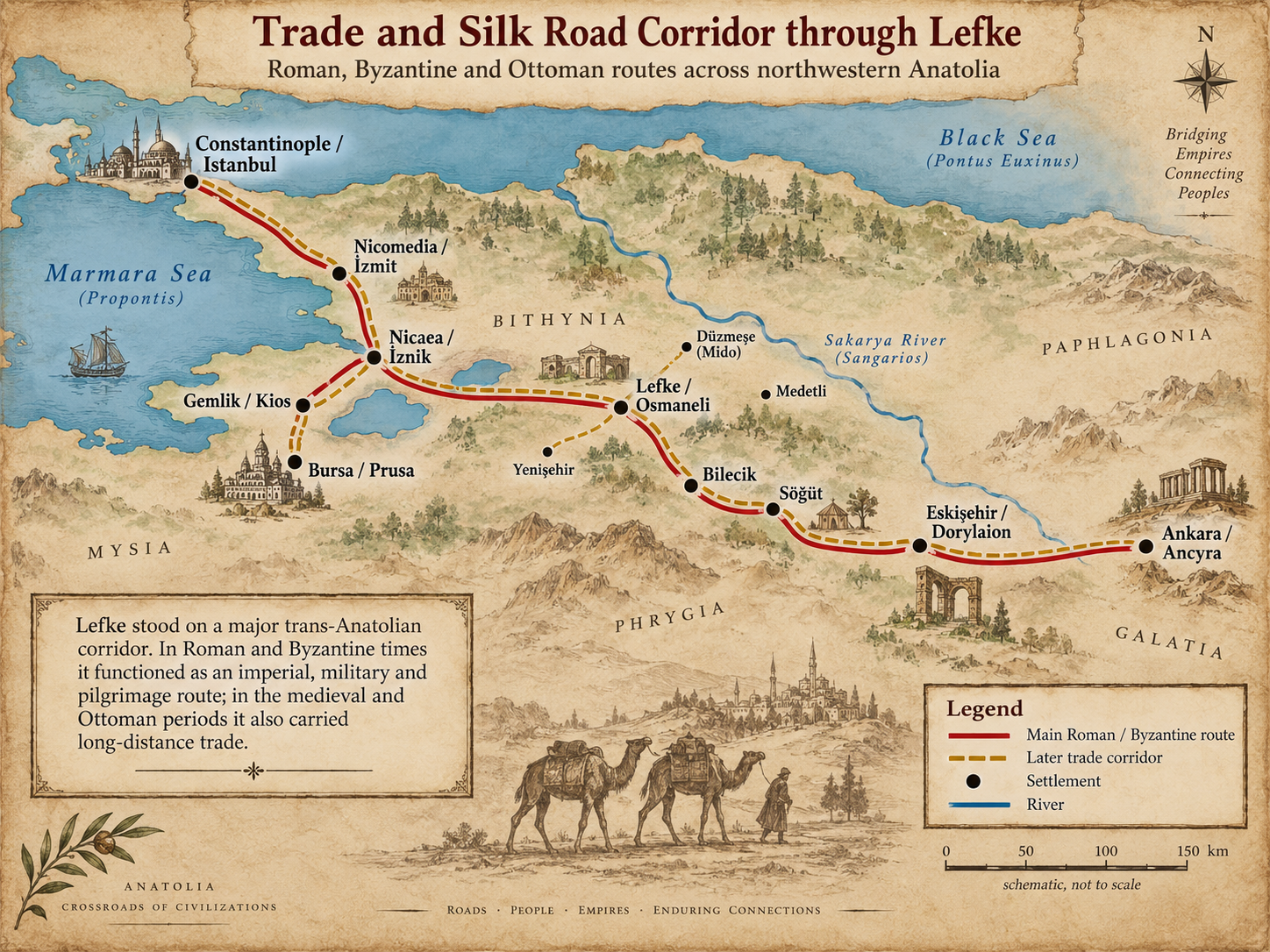
Silk Road Corridor
Continuity of the Roman road, pilgrimage route and Ottoman trade corridor within the same landscape.
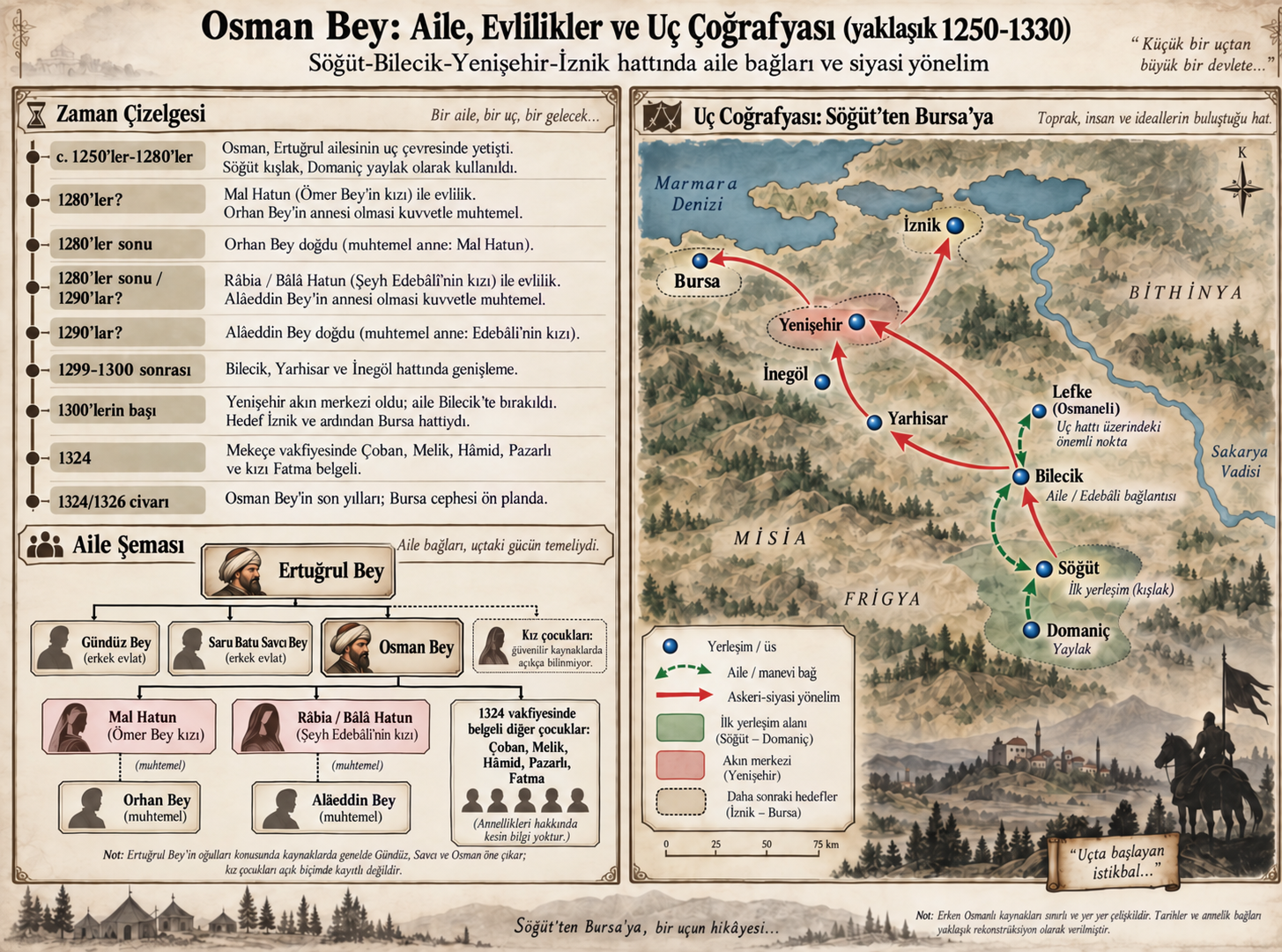
Ertuğrul and Osman Bey
The Söğüt–Domaniç frontier, the Byzantine lords of Bilecik and the Lefke campaign of 1304–1305.
Town, Fire and Railway
Neighbourhoods, the 1875 fire, the 1892 railway and life in a town of several religious communities.
Greek Orthodox Lefke
Aya Yorgi, schools, Kilise and Mengene neighbourhoods, silk and life before the population exchange.
Main Timeline
Selected Evidence
Catalogue of 92 Inscriptions
Öztürk’s Osmaneli/Lefke epigraphic catalogue, listed village by village.
Road Corridor
A long-lived route from Nikaia through Lefke into central Anatolia.
Ancient DNA from İznik
The nearest published genomic samples to Lefke: nine individuals from the İznik Basilica.
Osman Bey’s Frontier Landscape
The early Ottoman area between Söğüt, Bilecik, Yenişehir, Lefke and İznik.
Aya Yorgi
Building phases traced through archival documents of 1870, 1892 and 1896–1897.
Silk Economy
Reeling equipment in 1735–36, factories in 1884 and business owners in 1906.
Fire, Silk and Opium
The 1875 fire is a key event for understanding Lefke’s agricultural economy, education, urban fabric and shared memory.
Mustafa Kemal Pasha in Osmaneli
The visit of 16 January 1923, two children, contemporary press photographs and the family memory of Fadıl Ünver.
Maps and Visual Research
Some source maps, charts and plans retain Turkish labels; the captions are in English. Label key: harita = map; köy = village; merkez = town centre; yol = road; nehir = river; nüfus = population; göç = migration; yıl = year; kadın = female; erkek = male; eski = historical; güncel = present-day; compass K/D/G/B = N/E/S/W.
Oral History and Memories
Children played at learning the Greek alphabet with their Greek Orthodox neighbours.
Turkish folk songs were sung at Greek Orthodox weddings.
“We were like siblings with the Rum”; the streets were very clean.
Family memory preserves the presence of a bell and cross at the church.
Photograph and Archive Gallery
New Research Topics
Greek Orthodox Families and Names in Lefke
Names documented in population, income-tax, gravestone, occupational and community records.
Neighbourhoods, Streets and Houses
Kilise, Mengene and Muslim neighbourhoods; shared market spaces; the relationship between houses and production.
Shops, Crafts and Occupations
Documented occupations, from gardeners and doctors to silk merchants and tailors.
Priests, Metropolitan Affiliation and Church Objects
Aya Yorgi’s archival records, bell, women’s gallery and community institutions.
Greek Orthodox Schools and the Scholarcheio
Three Christian schools, language, education around the church and the Martoglou connection.
Population, Refugee Settlement and Migration Maps
Population data for 1899–1915, settlement at Tekke and Selimiye, and maps of modern internal migration.
Sources
Contribute to the Research
If you have photographs, documents, gravestone records or family accounts relating to Lefke, please share them with us.
✉ Contact FormNames and Key Terms
- Leukai / Lefke / Osmaneli
- Leukai is used for the ancient settlement; Lefke for the Ottoman town; Osmaneli for the modern town. Names in quotations and source titles are retained.
- Rum
- An Ottoman Greek Orthodox community designation. It should not automatically be treated as a statement of modern nationality or genetic ancestry.
- Aya Yorgi / Hagios Georgios
- Two names for the Church of Saint George.
- Temettuat
- Ottoman registers recording income, property and occupations.
- Salname
- An official Ottoman yearbook.
- Scholarcheio
- A Greek school designation retained where the source uses it.
- Mansio / mutatio
- A Roman stopping station / a station associated with changing horses.
- Epigraphy
- The study of inscriptions.
- Population exchange
- The compulsory Greek–Turkish population exchange; dates and individual cases are discussed on the relevant pages.